
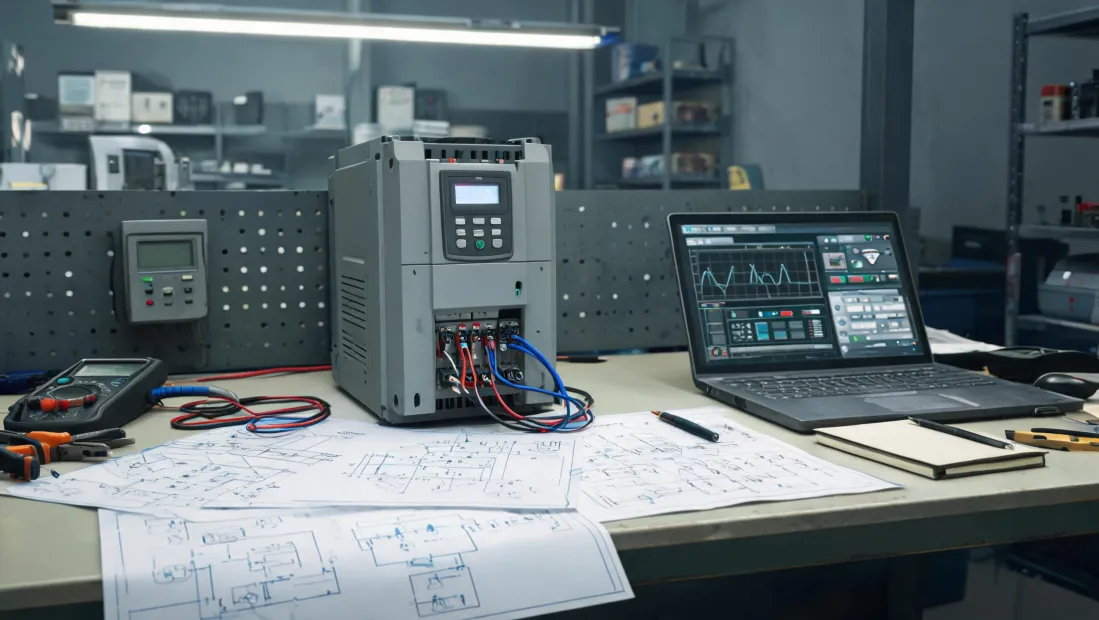
It's 4:45 on a Thursday afternoon. A packaging line is down, the Yaskawa VFD is fried, and the maintenance manager needs a replacement before the night shift starts. Or maybe it's the opposite problem — you're a drive OEM engineer finalizing a BOM for a new conveyor system, and you need to confirm PLC compliance requirements before your customer's audit next week. Or perhaps you're a distributor evaluating whether to stock Yaskawa VFD drives as a long-term revenue line.
All three situations involve buying a Yaskawa VFD. But the decision logic is completely different. I coordinate rush orders for an industrial automation supplier — I've handled 60+ time-sensitive orders over seven years, including same-day turnarounds for manufacturing clients. Most of my mistakes came from applying the wrong playbook to the wrong scenario. Let me break down what actually matters in each case.
First: Figure Out Which Scenario You're In
Before you start calling suppliers, answer one question: what happens if you don't have this VFD by tomorrow?
- Scenario 1 — Production is down. A specific Yaskawa VFD model failed and you need a replacement in hours, not days. Downtime cost is measured in thousands per hour.
- Scenario 2 — OEM design or compliance audit. You're building a new machine or integrating a drive into an existing PLC system. You need documentation, traceability, and regulatory compliance more than raw speed.
- Scenario 3 — Distributor or system integrator stocking decisions. You're evaluating suppliers for ongoing Yaskawa VFD inventory, not solving a single crisis.
If you're not sure, ask yourself: is this a transaction or a relationship? A transaction (Scenario 1) prioritizes speed and verification. A relationship (Scenarios 2 and 3) prioritizes transparency and support.
Scenario 1: Production Down — You Need a VFD in Hours
Last November, a client called at 5:15 PM. Their packaging line's Yaskawa V1000 had failed during the afternoon shift. They needed a replacement by 7 AM the next morning, or the line would sit idle for two days. The penalty clause was $15,000.
Here's what I've learned from situations like this — and from three mistakes I made early on.
Mistake 1: Confusing 'fast shipping' with 'in stock.' In my first year, I made the classic rookie error: saw a supplier advertising "quick ship" on a Yaskawa VFD and assumed that meant same-day availability. It didn't. They processed the order quickly — but the drive still shipped from a warehouse 1,200 miles away. Two days. I lost half a day before realizing the difference. Now my first question is always: "Is this unit physically in your warehouse right now? Can I send a courier to pick it up tonight?"
Mistake 2: Assuming 'compatible' means plug-and-play. A supplier once offered a third-party replacement when the exact Yaskawa model wasn't available. I approved it without checking torque ratings line by line. The drive bolted in fine, but startup torque was insufficient for the load. We had to pull it and redo the installation. That assumption cost $800 in emergency labor and six extra hours of downtime. Learned never to assume after that one.
Mistake 3: Not verifying serial numbers. Yaskawa VFDs have traceable serial numbers. If a supplier can't provide a photo of the serial label, or if the number doesn't return a valid result in Yaskawa's system, you might be looking at a refurbished unit sold as new. I've seen drives with fresh paint over obvious solder rework. Now I treat serial verification as non-negotiable — even when the client is screaming about timeline.
Bottom line for Scenario 1: Speed matters, but verification prevents rework. Twenty minutes of due diligence is cheaper than a second emergency installation.
One more thing: for genuine Yaskawa VFD drives, the serial number format and traceability process are documented in Yaskawa's product authentication guidelines (check yaskawa.com for current verification procedures). I flag this because counterfeit drives are a real problem in the secondary market.
Scenario 2: Drive OEM Integration — Compliance Documents Matter More Than Price
This scenario looks calmer. There's no screaming production manager. But it's actually where the expensive mistakes hide, because you're committing to a design that will run for years.
In Q2 2023, we supplied a Yaskawa VFD to a food machinery OEM for a conveyor drive. Small project — maybe 40 units a year. But their vendor audit required three documents: Yaskawa's authorized distributor certificate, a CE Declaration of Conformity, and a written statement on Modbus/EtherNet-IP interoperability with the customer's existing PLC system.
That last one nearly derailed us.
I assumed 'PLC compliance requirements' meant the interface protocol matched. But the OEM's engineering team needed something more specific: confirmation that the drive's safety interlock logic wouldn't conflict with their PLC's emergency-stop sequence, and EMC test data from a recognized lab. None of that is in the standard product manual. It required factory FAE support and a formal written response.
Here's my takeaway: In OEM or integration scenarios, you're not buying a box — you're buying documentation and technical support. Can your supplier get a written compliance statement from the manufacturer? Can they provide dated test reports? These matter more than a 5% price difference when your customer's audit team is reviewing the BOM.
I also learned to build buffer time into OEM projects. Our internal rule now: once the BOM is frozen, lock the VFD supply 4–6 weeks ahead. That rule exists because of a Q2 2023 incident — one missing drive board delayed an entire shipment by 11 days and nearly cost us the contract. Time pressure decisions rarely produce good outcomes.
Scenario 3: Distributor Stocking — Long-Term Cost Beats Unit Price
If you're a distributor or system integrator evaluating ongoing Yaskawa VFD supply, the decision calculus shifts again. You're not solving one problem — you're choosing a partner for dozens or hundreds of transactions.
Three things matter more than unit price:
- Supply consistency. Can the supplier reliably stock high-turnover models like the V1000 or GA700 series? Or do they only have inventory when the market is loose?
- After-sale technical support. When your end customer gets a fault code at 2 AM, does the supplier have engineers who can diagnose over the phone? Or do they just forward you to Yaskawa's general support line?
- Price transparency. Does the quoted price include tariffs, freight, and warranty handling? Or will those appear as line items after you've committed?
That third one is my personal red flag. I've watched distributors get burned by suppliers who quote a bare-unit price and then add programming cables ($80), EMI filters ($200+), and braking resistors ($150) as separate charges after the PO is signed. By the time shipping and customs are added, that "lowest price" turns out to be 15–20% more expensive than the supplier who quoted all-in from the start.
My rule when comparing Yaskawa VFD quotes: ask 'what's NOT included' before you ask 'what's the price.' Suppliers who do long-term business will tell you upfront. The ones who dodge the question are telling you something too.
Last quarter, I ran a side-by-side comparison for a distributor evaluating four Yaskawa VFD suppliers. The headline price gap between the cheapest and most expensive quote was 12%. After normalizing freight, warranty terms, and average technical support response time, the real gap shrank to about 5%. The supplier with full transparency — who listed every fee on the quote — won the long-term contract.
Prices vary by model and quantity, but for reference: small-frame Yaskawa V1000 drives (0.4–7.5 kW) typically quote between $350–$1,200 depending on configuration (based on January 2025 market quotes; verify current pricing with authorized distributors).
How to Tell Which Scenario You're Actually In
If you're still unsure, try this:
- Is the machine already dead? If yes — and you know the exact model and fault code — you're in Scenario 1. Priority order: in-stock verification > serial number check > delivery logistics > price.
- Are you submitting documents to a customer or auditor? If yes — you're in Scenario 2. Priority order: compliance documentation > technical support > supply reliability > price.
- Are you evaluating a supplier for the next six months or longer? If yes — you're in Scenario 3. Priority order: price transparency > support responsiveness > stock consistency > unit price.
Plenty of real situations mix two or three of these. An OEM might have an urgent test-bench failure and a production ramp coming. My advice: separate the urgent from the strategic. Use Scenario 1 logic to solve the immediate problem. Then step back and evaluate the long-term supply plan on its own merits — without letting today's fire distort tomorrow's decision.
In my experience, the most expensive mistakes happen when you use the wrong decision framework at the wrong time. Figure out which scenario you're actually in, and the rest gets a lot simpler.