
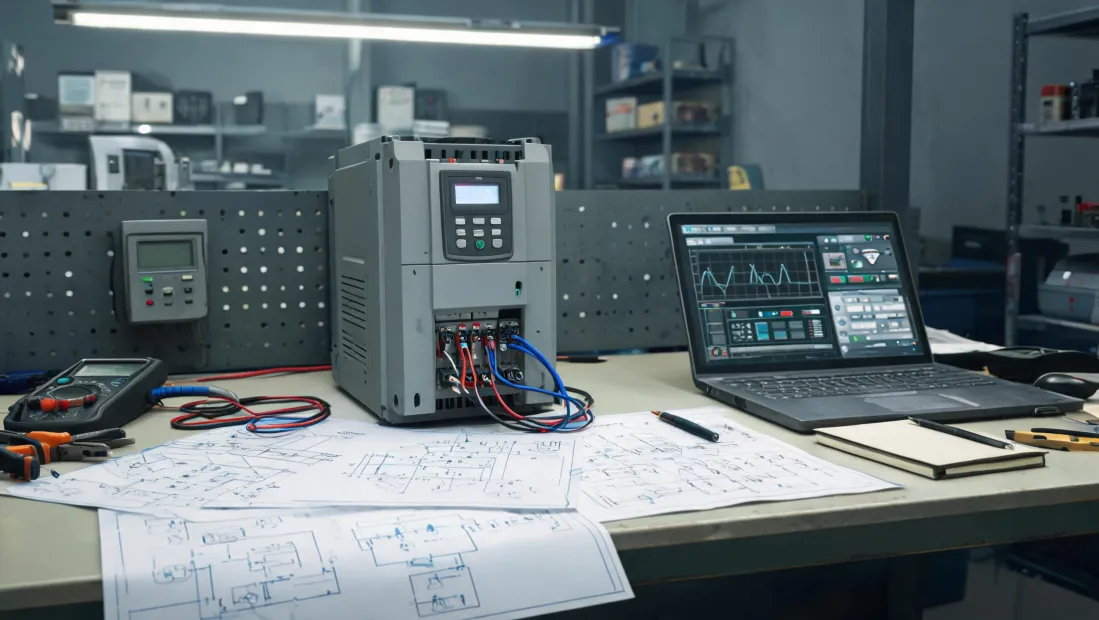
In early 2023, I was sitting in a conference room with our facilities manager and our controller, trying to figure out why three different motor control panels had failed within six months. I'm the office administrator for a 140-person manufacturing support company. I handle procurement across 11 vendors — everything from office supplies to industrial components — and I report to both operations and finance. At that point, I'd been managing purchases for about five years. I thought I understood vendor evaluation.
I didn't.
The panels used Yaskawa VFDs — v1000 series drives — along with contactors, relays, and timers. Nothing exotic, but not cheap either. When we needed replacements, I did what I always did: I pulled quotes from three suppliers, compared unit prices, and went with the lowest bid. The quote was about $1,200 less than our regular distributor. My controller was thrilled. I felt like I'd done my job.
That feeling lasted about three weeks.
The Order That Looked Like a Win
The first shipment of yaskawa vfd drives arrived on a Friday. Two of the three units in the order had mismatched serial numbers on the box versus the unit itself. One had a manufacturing date stamp that didn't match Yaskawa's format — I only noticed because our maintenance tech pointed it out. He'd been working with Yaskawa drives for over a decade and said the label looked off.
I emailed the supplier. No response for four days. When they finally replied, they said the discrepancy was "a labeling error from the warehouse" and offered a $150 credit. I pushed back. They stopped answering.
Meanwhile, our production line was down. The lead time for a replacement from our regular distributor was 5-7 business days (this was back in March 2023, before some of the supply chain improvements later that year). We lost two production days on one line. The overtime cost alone was roughly $3,800. That's not counting the expedited shipping I had to pay for — another $420.
Saved $1,200. Lost over $4,200 in direct costs. I ate that entire difference in my next budget review.
What I Should Have Checked
Here's the part that still frustrates me: the warning signs were there. The supplier's website listed contactors and timers alongside yaskawa vfd drives, but they also sold shipping supplies and office furniture. It was a generalist operation. I didn't think that mattered. It did.
After that mess, I sat down with our maintenance lead and built a checklist for evaluating drive manufacturers and component suppliers. Not just price. Here's what we now verify:
- Authorized distributor status — Does the supplier appear on the manufacturer's official distributor list? For Yaskawa, that's verifiable directly on their site.
- Invoicing and traceability — Can they provide a proper invoice with manufacturer part numbers, lot codes, and warranty documentation?
- Technical support capability — If a drive faults, can they help troubleshoot, or do they just ship boxes?
- Return and RMA process — What's the actual process if something's wrong? How long does it take?
That last one — the RMA process — is where the cheap supplier completely fell apart. They had no formal process. I had to email a generic support address and wait. Our regular distributor, which costs more per unit, has a 48-hour RMA turnaround and a named account rep who answers the phone.
I'm not saying price doesn't matter. It does. But the unit price is the tip of the iceberg. Total cost of ownership includes the order price, shipping, expedite fees, downtime costs, rework, and the time I spend chasing problems. When I recalculated the TCO for that first order, the "cheap" supplier was actually 38% more expensive than our regular source.
The Turnaround
After the RMA nightmare, I went back to our regular distributor and negotiated a volume agreement. We committed to quarterly orders for yaskawa vfd drives and related components. They gave us a modest discount — about 8% off list — and guaranteed 48-hour RMA processing. That contract has been in place for over a year now. We've had two RMA claims in that period. Both were resolved in under three days.
The best part? I stopped getting those 3 a.m. worry sessions about whether a shipment would arrive correct or whether I'd have to explain another downtime incident to my VP.
There's something satisfying about finally getting a vendor process systematized. I only wish I'd done it before the $4,200 lesson.
What I'd Tell Anyone Evaluating Drive Manufacturers
If you're sourcing Yaskawa VFDs or any industrial control components, here's the bottom line: verify the supplier's authorization status, ask about their RMA process before you order, and calculate total cost — not just unit price. A supplier who can't provide proper documentation or a clear RMA path is a red flag, no matter how good the quote looks.
I can only speak to our situation — a mid-size company with predictable, recurring orders for motor control components. If you're dealing with a seasonal business or one-off projects, the calculus might be different. But for us, the TCO approach has been a game-changer.
Trust me on this one: the cheapest quote is rarely the cheapest supplier.