
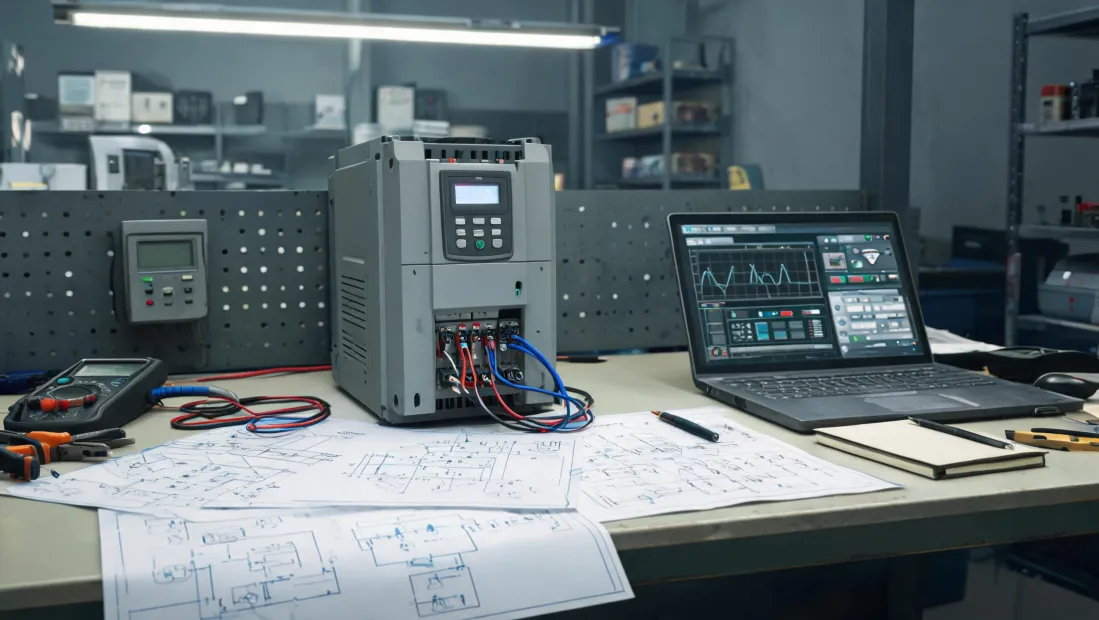
It was a Tuesday in March 2023 when the order landed in my inbox. A regional food processing plant needed 12 Yaskawa VFD drives, 50 panel timers, and 200 relays. They wanted the timers with their own branding — a private label run — and they needed everything within three weeks.
I've been handling component procurement for an industrial automation distributor for eight years now. I've placed hundreds of orders for Yaskawa VFDs, PLCs, contactors, and the rest. I've also made my share of mistakes. But that March order was the one that finally pushed me to write a proper pre-check list. Total damage: $7,400 in wasted product and expedited freight, plus a very unhappy customer.
How the Order Started
At the time, we were growing fast. My role was shifting from inside sales to sourcing, and I was confident. Too confident. I'd spent years selling Yaskawa VFD drives, so I knew the drive side cold. Timers and relays were a different world, though. We'd always bought those from a local relay wholesale supplier — nothing fancy, but it worked.
The customer asked for two things that should have raised red flags. First, they wanted the timers to be OEM-produced with their logo on the front. Second, they wanted the relays from a wholesale source that could handle the volume. They said they'd been burned before by counterfeits and inconsistent branding.
"This VFD stuff is easy," I told myself. "How hard can a timer be?"
The Mistake
I found a timer manufacturer overseas who offered a price 22% below our usual supplier. The samples looked great. The specs matched — 24V DC, multi-function, DIN rail mount, the works. They also said they could do the private label branding without any minimum order quantity issues. That should have been suspicious.
I ran the numbers in a spreadsheet. The savings on 50 units plus the relay wholesale bundle would be around $2,100. My gut said something was off when their sales rep dodged a question about production batch traceability. But the spreadsheet looked good, and the customer was pushing for a quote. So I approved the purchase order.
What I didn't do was verify the manufacturer's actual private label process. I didn't ask for a pre-production sample with our logo. I didn't check whether the "OEM" branding they promised was real OEM manufacturing or just them putting a sticker on a generic timer case.
Turns out it was the second one. Worse, the "OEM" timers arrived with a slightly different internal board revision than the samples. The difference didn't show up in basic bench testing — it showed up when the customer installed them next to the Yaskawa VFDs on their production line. Every few hours, some timers would drop out and reset, causing the whole line to fault.
The Fallout
Let me be clear: this wasn't a Yaskawa VFD problem. The drives performed exactly as specified. The issue was that the timer manufacturer's board revision had a different noise tolerance, and in an industrial panel with VFDs running nearby, that became a real problem. If I'd tested the final product in a realistic panel environment, I would've caught it.
I remember staring at the customer's email at 9:47 PM on a Thursday. "Line down for three hours. We need a plan by tomorrow morning."
We ended up having to replace all 50 timers. But here's the embarrassing part: the replacement timers came from our original supplier at a higher price, and we had to pay for overnight freight. The $2,100 I'd saved became $4,300 in extra costs. Add in two technicians' time and the customer goodwill we burned, and the real cost was well over $7,400. Maybe closer to $9,000, I'd have to check the final numbers.
"Private label is not OEM. If you treat them the same, the difference will eventually cost you — maybe not on the first order, but it will."
What I Learned About Timer OEM vs Private Label
The experience changed how I talk about timer OEM vs private label with customers and with our own purchasing team. This is one of those topics where the terms get used interchangeably, but they're not the same.
OEM manufacturing means the factory builds the product to your specification. Your specs drive the board design, component selection, and testing. That comes with higher minimums, longer lead times, and usually a real engineering relationship.
Private label usually means taking an existing product and putting your brand on it. There's nothing wrong with that — we've done it for customers who needed a cost-effective path. But you should know what you're getting. If something changes in the factory's standard product (like the board revision I mentioned), your private label product changes too, whether you asked for it or not.
If your operation genuinely needs a custom timer with specific behavior, look for a timer manufacturer who will document the full spec and give you a sample from the actual production run. If you just need your logo on a reliable product, private label can save you time and money. But don't confuse the two. That confusion cost us more than a plane ticket to visit the factory would have.
What I Learned About Relay Wholesale Sourcing
The relay part of the order was less dramatic, but it taught me something about sourcing. We bought relays from a wholesale distributor who offered a great price. They had a UL mark on the packaging and the specs looked fine. But when we checked the boxes, the date codes were inconsistent — some relays had been sitting in inventory for four years.
That's not always a problem, but for a customer expecting fresh product for a production line, it was a red flag. The "local is always better" thinking comes from an era when physical proximity meant faster delivery and easier returns. Today, a good remote relay wholesale partner can beat a local one on both price and service — but only if you verify things like date codes, batch traceability, and return policies in advance.
I also learned to treat any supplier's "guaranteed OEM quality" claim like an ad claim. Per FTC guidelines (ftc.gov), claims need to be truthful and substantiated. If a manufacturer won't show you the actual production sample or traceability documentation, that claim isn't substantiated. Walk away.
The Checklist I Use Now
After that order, I put together a pre-order checklist. We've caught 47 potential problems with it in the past 18 months. Most are small, but a few would have been expensive. Here's the short version:
- For any timer or relay order, request a sample from the production batch — not the marketing sample — and test it in a panel with motor drives running.
- Define whether you need OEM or private label. Get the manufacturer to confirm in writing which one they're quoting.
- Check date codes and batch traceability on relay wholesale purchases. Ask how long inventory has been sitting.
- For Yaskawa VFD drives, buy from authorized distribution channels. Too many gray-market units end up with missing serial numbers and no warranty.
- If a sales rep refuses to answer a basic question about production traceability, walk away. Price is not worth that risk.
When This Approach Doesn't Work
I don't want to sound like this checklist solves everything. There are honestly cases where our buying constraints make it impossible to follow all of it. If your customer needs a custom timer OEM program in three weeks, you might not have time to request a production-batch sample. If you're buying relays for a non-critical circuit, the date code check might be overkill.
The point is to know which corners you're cutting and why. As for pricing, the figures I mentioned were accurate as of March 2023. The market changes fast, so verify current lead times and costs before making your own plans. This isn't advice to avoid timer manufacturers or relay wholesalers — just a warning to check what you're actually buying.
Here's the honest truth: no supplier is right for every situation. There's no "best" timer manufacturer or relay wholesale partner. There's only the one that fits your specific requirements — and you can't know that until you ask the uncomfortable questions.