
The inspection that changed my mind
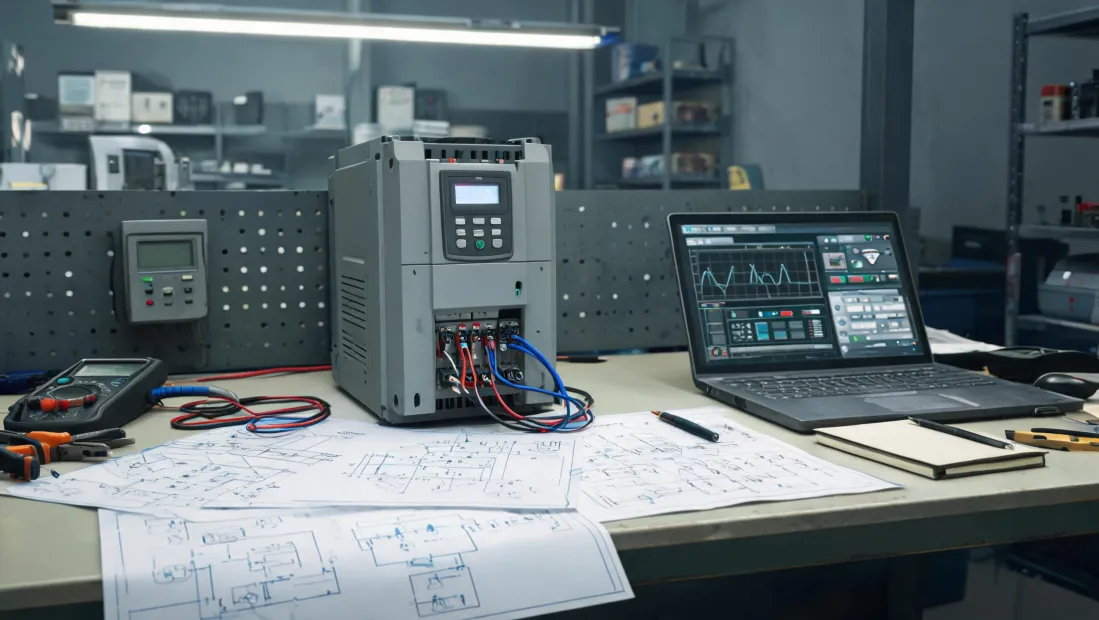
In March 2024, I spent a week inspecting 200 motor controllers that a customer had bought from a "private label" source. They were installing them in a food processing line and asked us—their Yaskawa VFD supplier—to run a quality check before they committed to the full rollout.
That week changed how I talk to customers about private label vs. OEM equipment.
A little context: I'm a quality and brand compliance manager at an industrial controls company. I review every deliverable before it reaches customers—roughly 300+ line items a year. My focus is spec compliance, consistency, and whether a product actually matches what's on the label. I'm not an electrical engineer, so I can't speak to how every circuit behaves under every condition. What I can tell you, from a procurement and quality perspective, is what you should check before signing off on a "compatible" controller.
Why the customer came to us
The customer was upgrading their packaging line. They had 15 Yaskawa VFD drives that had been running for years, and they needed to add 8 more units. A reseller offered them a controller private label option at a lower price, claiming it was "built to the same standard." The same email also asked whether there was any real difference between a PLC OEM vs private label, because they were considering a private label PLC for line control too.
Honestly, we get this question a lot. In my first couple of years in this industry, I might have said, "They're basically the same, just with a different badge." Like most beginners, I confused "compatible" with "identical." This inspection fixed that.
What the inspection turned up
We pulled 10 of the 200 controllers for our standard acceptance tests, then opened a few to compare the internals against the genuine Yaskawa VFD drives we stock. On paper, the specs matched: voltage, current, enclosure size, even the terminal layout. The details didn't.
The certification marks didn't verify. The private label units carried CE and UL logos, but we couldn't find the registration numbers in the public UL database. I'm not a legal expert, so maybe there was an administrative reason. But under FTC advertising guidelines, claims need to be truthful and substantiated. If a manufacturer is putting a certification mark on without the paperwork, that's not just a red flag—it's a compliance risk.
The thermal design was different. The private label drives had thinner heat sinks and no thermal pad between the power module and the housing. In a 40°C ambient environment, that can shorten the lifespan of the drive significantly. For a line running 20 hours a day, that's a non-negotiable difference.
The software was missing features. The firmware on the private label drives had most of the same menus, but key torque and energy-saving parameters were stripped out. In a packaging application with frequent start/stop cycles, those functions aren't extras—they prevent nuisance trips.
The turning point
I didn't fully understand the value of genuine components until I saw a batch of 40 drives in that order where the IGBT modules were soldered directly to the board, with no isolation pad. Bench testing might not catch that. A 120% overload condition would. (This was back in March 2024, and it's still the clearest example I've seen of why spec sheets don't tell the whole story.)
The customer had saved about $4,000 on that order—unfortunately, that savings started evaporating almost immediately. We found at least one spec deviation in 8 of the 10 units we tested. That's an 80% inconsistency rate, which is unacceptable for even the least demanding application.
Personally, I don't think the problem is always the manufacturer. Some private label brands do source quality parts. The issue is that, as a buyer, you can't tell which ones they are without the same level of verification we do. And when you're buying a year's worth of spares, you're putting your uptime on the line.
What the customer did next
They returned the private label controllers and spec'ed genuine Yaskawa VFD drives for all 23 positions. They also chose a Yaskawa PLC over the private label option, which fit the existing control cabinet and made commissioning faster.
Was it more expensive? Yes, upfront. But here's the thing: we asked them to compare total cost of ownership rather than purchase price. The genuine units came with a longer warranty, updated documentation, and access to our tech support. At their actual duty cycle, the energy savings from the restored software features offset about a third of the price premium in the first year. (That's based on their power meter data, not a marketing claim.)
That doesn't mean private label is always the wrong choice. If the application is temporary, lightly loaded, or has redundant spares in the cabinet, a cheaper controller might be acceptable. Our customer's situation was different: a food-grade plant with strict uptime goals and zero tolerance for unplanned stops.
An informed customer asks better questions and makes faster decisions. I'd rather spend 10 minutes explaining the difference than deal with a shutdown later.
OEM vs private label: the terminology trap
One thing that confused the customer was the word "OEM" in the listing. The reseller called it "100% OEM compatible." In practice, an original equipment manufacturer builds a product to a defined spec, sells it under its own brand, and backs it up after the sale. A private label product is made by a third party and sold under someone else's name. "Compatible" is not the same as "identical."
Here's how I explain the PLC OEM vs private label question to buyers:
- OEM PLCs are tested as a complete unit, with validated firmware and a support chain from the brand owner. You know exactly what you're getting.
- Private label controllers can range from honest white-label products to rebranded clones. The difference is rarely visible from the outside.
If you can't verify the manufacturer behind the private label name, you're not saving money—you're buying an unknown.
A quick checklist for buying VFDs (or any control component)
I've been doing quality inspections for over four years now, and this is the checklist I use when we evaluate a new supplier:
- Check the certificate numbers. Don't just look for a UL or CE logo. Ask for the file number and verify it with the issuing body. It takes 10 minutes.
- Test a sample under your own conditions. We ran a blind comparison with the customer's maintenance team. Three of the private label drives produced less torque at low speed, and one made the motor hum due to voltage ripple. They felt the difference before they knew which was which. (The price gap was $200 per unit. On 23 units, that's $4,600 for measurably better performance.)
- Read the manual. The private label drives came with a PDF that hadn't been updated since 2018. The Yaskawa documentation included software versions, troubleshooting codes, and wiring examples for the exact model. That matters when something goes wrong at 2 a.m.
- Think about support. When the customer later needed help with configuring their new drives, they had our repair and tech support team. The private label source had only an email address. The contrast was obvious.
The bottom line
In my opinion, the OEM vs private label debate isn't about brand loyalty. It's about predictability. In industrial automation, unpredictability is the real cost.
I still have a lot to learn about this business—I'm not a design engineer, and I don't pretend to be. But I do know what a quality inspection tells you: specs on paper are the start, not the end. Whether you're sourcing Yaskawa VFD drives or comparing a PLC OEM vs private label, the extra questions are worth the time.
So if you're looking at a cheaper private label option, don't just ask "is it compatible?" Ask what exactly makes it different. Ask for proof of certification. Run a test. Calculate the total cost over five years, not five days.
An informed customer is the best kind of customer. That's true for us as a VFD supplier, and it's true for anyone making these decisions.