
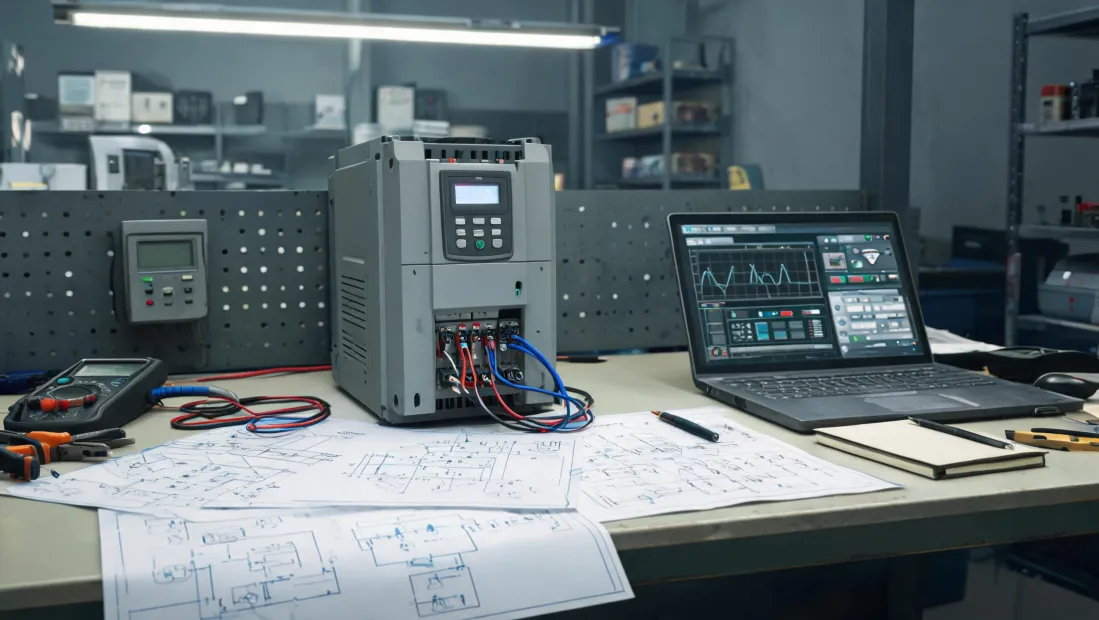
I review Yaskawa VFDs and related control components before they go out to customers. That means 200+ unique items a year. It's made me both skeptical and practical. In Q1 2025, I rejected roughly 7% of first deliveries—not because the brand was wrong, but because the details around the drive were wrong.
So let's talk about what to look for in a drive supplier. Not the textbook answer. The answer I actually use when a bulk VFD order lands on my bench.
The surface question: Who has the best price on Yaskawa VFDs?
Every week, I get requests that sound similar. Someone needs a Yaskawa VFD, usually a V1000 or a 1000-series unit. They've checked three suppliers. They want the lowest per-unit quote, especially for bulk VFD orders. Fine.
Price is a fair place to start. But after four years of reviewing shipments, I've learned that the lowest quote tells you less than you'd think. In fact, I can probably predict where a bulk order will go sideways if I look at the quote carefully enough.
Here's why.
The deeper problem: A low-priced bulk VFD order is rarely just one product
'Genuine' doesn't mean 'complete'
The first problem is that 'genuine' and 'complete' are two different things. When I compare two Yaskawa VFD quotes side by side, I look for what's included. A genuine Yaskawa VFD can still arrive with old firmware. It can be from gray-market stock. It can have a manual that doesn't match the unit. On a bulk VFD order, you might get three pallets from different production lots. They look the same. They behave slightly differently.
I'm not 100% sure why this catches so many people off guard. But I've seen buyers focus on one thing—the model number—and miss the rest.
Support is part of the product
The second problem is support. A VFD is not a light switch. It needs programming, fault-code interpretation, and sometimes repair. If your supplier can't answer a question about a bUS fault on a V1000 display, you're going to pay an outside engineer to answer it. On a production line, that's expensive.
The control package around the VFD
The third problem is the control package around the VFD. This is where the contactor comes in. I know 'contactor' is not a headline word, but try building a motor control panel without one. Most Yaskawa VFD applications need a properly sized contactor or disconnecting means, perhaps a relay or timer if you're integrating with other equipment. A supplier that only sells you the drive—and leaves you to figure out the contactor, fusing, and wiring—isn't really supplying a solution. They're supplying a problem.
And if the quote is suspiciously low, I'd dare to look at where costs got cut. Sometimes it's the actual drive. Other times it's the line reactor that should have been in the BOM. Sometimes it's the technical review call that never happened.
The cost of skipping the details
Let me give you a real pattern I've seen. A purchasing manager gets three quotes for a bulk VFD order. One supplier is 10% cheaper. The drive is genuine, so they go with it. The order arrives. The manual is in the wrong language. The firmware is three years old. The units are mixed voltage/phase configurations because the same model number can cover multiple variants.
That 10% savings disappears quickly. Someone has to sort the lot. Someone has to update firmware. Someone has to ask local support why the parameters don't match the manual. Soon you're not saving 10%; you're spending 15% extra in labor and downtime.
I'll admit, I've gotten lazy on this before. I knew I should verify serial numbers before accepting delivery, but I thought 'we've used this supplier for a while, what are the odds?' That was the time the pallet had mixed voltage models in it. It wasn't catastrophic, but it cost us a day of sorting and some bruised egos.
I have mixed feelings about this kind of story because it sounds like a cliché. But it happens often enough that I've stopped calling it bad luck. It's a process problem.
So if you're researching what to look for in a drive supplier, don't start with the discount. Start with the 'what if it fails' question. Because a Yaskawa VFD is usually the last thing to fail. The failure tends to happen in the parts around it—the contactor, the wiring, the firmware, the wrong option card, the misunderstanding about a control input.
And those are exactly the parts a price-only supplier doesn't help with.
What I actually look for in a drive supplier now
I won't pretend there's a perfect checklist. But there are a few things I'd never skip again, especially for bulk VFD purchases:
- Traceability. Can they tell you the manufacturing date, country of origin, serial number range, and original channel for each Yaskawa VFD? If not, walk away.
- Firmware and manual alignment. Ask which Yaskawa VFD firmware version you're getting. It's acceptable to get older stock if it's disclosed. It's not acceptable to find out after the pallet arrives.
- Application support. Do they know what a bUS fault means? Can they walk you through a basic V1000 auto-tune? If they're quiet after payment, the drive costs more than the invoice says.
- Full BOM help. A VFD isn't the whole control panel. A good supplier will at least ask about your incoming voltage, motor data, control method, and whether you need a contactor, filter, or line reactor. That's what separates a supplier from a warehouse.
- Repair and return policy. What happens if a unit is dead on arrival? What's the turnaround for warranty repair? I've seen 'full warranty' turn into a four-month wait because the supplier had no repair bench.
I'm not saying the cheapest Yaskawa VFD is always bad. That would be lazy. But I am saying the cheapest quote has to justify its price in other ways—traceability, support, packaging, and a clear answer to 'what happens if I install this and it doesn't run.'
If you're buying bulk VFDs, get the serial numbers before payment. Ask for the firmware revision. Confirm that the contactor and control components in your BOM are compatible with the drive's input and output specifications—or ask, even if it makes you feel like a beginner. I've been doing this for a while, and I still ask questions when a spec feels off. It's cheaper than guessing.
As of April 2026, Yaskawa publishes current technical manuals, EMC information, and firmware notes at yaskawa.com. Use that. A supplier who tells you 'don't worry, it's all the same' should be a red flag. Not all Yaskawa VFDs are configured the same, and no one honestly can guarantee compatibility without application details.
At the end of the day, a drive supplier that focuses only on unit price is showing you something: they don't have much else to offer. That's okay if your application is simple and you know exactly what you need. But if you're sourcing Yaskawa VFD drives as part of a larger control system, you don't need a pallet. You need a partner who asks the right questions. Find that supplier, and the price will usually make sense in context.