
-
The call that changed how I compare suppliers
-
The two models worth comparing
-
Dimension 1: Emergency speed, one call vs. a round of calls
-
Dimension 2: Do they understand the circuit, or only the catalog page?
- Dimension 3: What to look for in a relay supplier
-
Dimension 4: Read the timer catalog and the controller catalog like a contract
-
Dimension 5: How they treat a small order
-
So which should you choose?
The call that changed how I compare suppliers
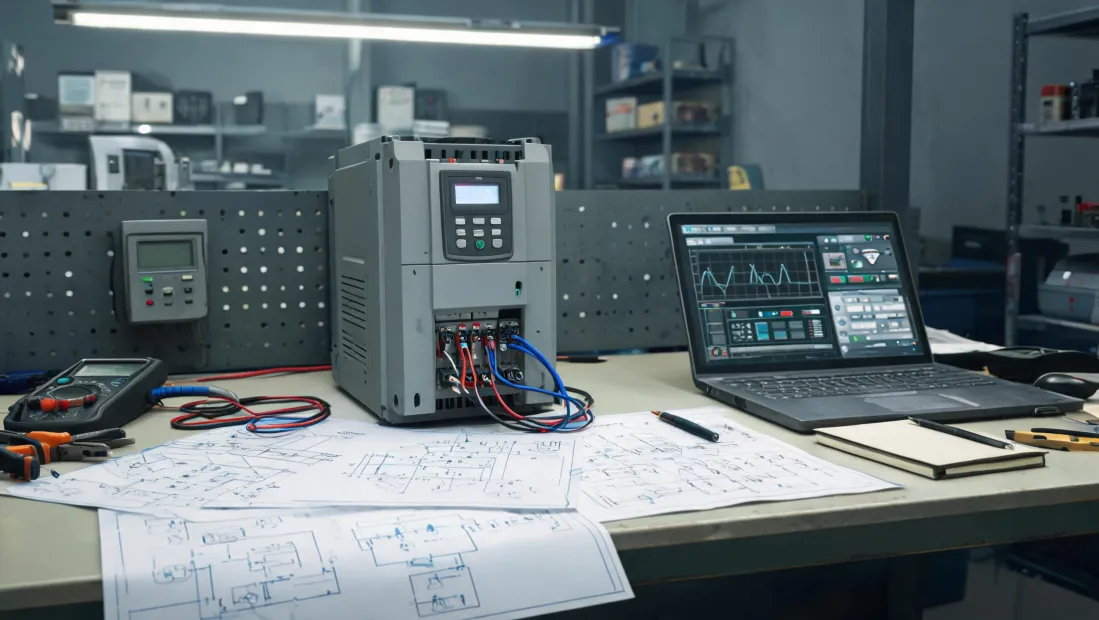
I got the call at 2:40 p.m. on a Tuesday. A maintenance manager at a food packaging plant was standing in front of a control cabinet that smelled like burnt electronics. The Yaskawa VFD on their main conveyor line was dark, the spare in their store room was the wrong voltage class, and the failed drive had also taken out a control relay and an on-delay timer.
The line had been down since 9:00 a.m. A batch of perishable product was waiting on the restart. Their usual drive-only supplier quoted five to seven business days. The customer had 48 hours before a penalty clause kicked in.
When I first started coordinating emergency supply for industrial customers, I assumed the right answer was to match every component with the deepest specialist I could find. A Yaskawa drive problem belongs to a Yaskawa drive expert. A relay problem belongs to a relay supplier. That logic works until you realize the line doesn't care how many supplier relationships you've built. It only cares about the moment it runs again.
Our team has worked through roughly 200 rush orders over the last few years. Maybe 180 — I'd have to pull the spreadsheet. Around a third involved more than the part the customer first called about. That pattern is why I now compare suppliers on a broader question than who sells Yaskawa VFD drives at the best price.
The two models worth comparing
In industrial controls, procurement usually comes down to two approaches.
Best-of-breed sourcing means buying each item from the supplier with the deepest expertise in that category: the Yaskawa drive from a drive specialist, the contactor from a contactor house, the timer from a timer catalog. In theory, this gets you maximum product knowledge. In practice, it works well when nothing goes wrong.
One accountable supplier means working with a distributor that carries Yaskawa VFD drives and the components around them: relays, timers, contactors, PLCs, and related control gear. When a panel fails, that supplier can quote the whole circuit, not just one line item.
I've watched both models succeed and fail. Here are the dimensions that actually separate them.
Dimension 1: Emergency speed, one call vs. a round of calls
Normal procurement is calm. You have time to compare quotes, confirm specifications, and build a paper trail. Emergencies remove that time.
Imagine a VFD dies at 4:17 p.m. on a Friday, and the failure also damaged the relay it controlled. With best-of-breed sourcing, you call the drive specialist first. They quote a drive and promise next-day shipping. Then you ask about the relay, and they tell you they don't carry them. The relay supplier is closed. The timer supplier still wants a part number even though you're not sure which timer you have. It's now 5:00 p.m., and you've told the same story to three different people.
With one accountable supplier, that same call is a single conversation. One person checks the stock, matches the relay coil voltage, confirms the timer function, and sends a complete quote. That doesn't mean they're smarter than the specialists. It means they're responsible for the whole problem instead of one piece of it.
Best-of-breed sourcing can be the right call when lead times are predictable and failures don't cascade. But in an industrial cabinet, one failed component often damages another. If speed matters, compare suppliers on the total basket of parts, not just the headline item.
Dimension 2: Do they understand the circuit, or only the catalog page?
When a caller starts with my Yaskawa VFD is tripping, I've learned to ask a few questions before recommending a replacement. What happened right before the trip? Is there a burnt smell from the relay? Is the timer stuck in its cycle? Sometimes the VFD is the victim, not the cause.
A one-category specialist may know the drive extremely well but stay silent on the rest of the control loop. That's a problem, because the real fault is often upstream or downstream of the drive: a relay contact that welded shut, a control transformer that dropped out, a timer output that failed closed.
I once watched a customer order a replacement drive for a machine that did not need one. The actual fault was a control relay that was intermittently dropping out under load. (Should mention: the original drive was fine, and they'd already paid roughly $680 in expedited shipping before a technician found the relay.) A supplier who can talk about relays and timers as easily as drives might have saved them that week.
What I mean is this: product knowledge matters, but circuit knowledge matters more when the line is down. Ask your potential supplier how they would troubleshoot a drive that trips only under load. If the answer is just replace the drive, you're talking to a parts counter, not a control specialist.
Dimension 3: What to look for in a relay supplier
Relays deserve a section of their own because they cause so many unplanned stops. When you're evaluating a relay supplier, the comparison should not stop at price and delivery.
Check the ratings that matter
A relay that says 5A, 250 VAC on the side can still be the wrong relay for the job. Industrial control relays are rated by utilization category. According to IEC 60947-5-1, a relay rated AC-15 is intended for switching electromagnetic loads, which is exactly what a contactor coil represents. For DC control circuits, DC-13 is the category you'll usually see. A supplier that can't explain these categories is guessing, and guessing is expensive.
I also look for coil voltage options and whether the relay has an LED or suppression built in. In an emergency, the difference between an AC coil and a DC coil can be the difference between a working cabinet and another burned board.
Traceability matters more than you'd think
There are a lot of gray-market parts floating around. I've opened relays that looked identical on the outside, same markings, same box, but had visibly different contact material inside (which is a lucky catch, since most counterfeits don't reveal themselves until they fail). Ask a relay supplier whether they can trace a batch number or provide a declaration of authenticity. If the answer is it comes from overseas, be careful.
The best relay supplier is the one that asks how the relay will be used. If they only say it's in stock, they're giving you a price, not a solution.
Dimension 4: Read the timer catalog and the controller catalog like a contract
When a supplier claims they can cover the whole control cabinet, test the claim. Ask to see their timer catalog and their controller catalog.
A credible timer catalog will show you more than a part number. It will explain the function modes: ON-delay, OFF-delay, flasher, star-delta transition. It will give the time range, the supply voltage options, and, ideally, a wiring diagram. If the catalog is just a price list with one generic timer, the supplier doesn't really distribute timers, they just resell a few.
The same test applies to a controller catalog. It should make the differences between product families clear enough to select the right device for an application: I/O counts, communication options, supply voltage, and program capacity. And it should connect to people who can actually answer questions about the products.
(Oh, and check whether the full-line distributor carries genuine Yaskawa VFD drives in stock, or just lists them on the site for SEO. There's a difference between a distributor and a website.)
Dimension 5: How they treat a small order
This is the dimension nobody puts in a comparison chart, and it's the one I care about most.
Some industrial suppliers have an unwritten rule: below a certain invoice size, your call drops down the priority list. I understand the economics, but urgency does not scale with invoice size. A $220 replacement relay can be the only thing between a plant and a $30,000-per-day downtime.
I've watched suppliers decide small orders aren't worth their time. I've also watched a repair shop, ignored for years, grow into a significant OEM—and the supplier who had ignored them never got a second chance. Small doesn't mean unimportant. It means potential.
A good supplier responds to a $180 order with the same seriousness as an $18,000 order, because they know the problem behind it might be enormous. Watch how potential suppliers handle your first small order. They're showing you how they'll handle your first emergency.
So which should you choose?
After years of triaging failures, I no longer believe in one universal winner. I believe in fit.
Best-of-breed sourcing can be the right choice if you're an OEM with stable volumes, a formal vendor qualification process, weeks of lead time, and in-house engineers who know the control circuit cold. In that world, a specialist relationship makes sense.
But if you're running a production line, a repair shop, a water plant, or any facility where an unplanned stop counts in hours rather than weeks, you need at least one accountable supplier who can deliver the entire bill of materials and troubleshoot across categories. You may not need them every day. You will need them on a day you can't predict.
The Tuesday afternoon call I started with ended well. The plant got its Yaskawa VFD, and the relay and timer that failed alongside it, in time to save the batch. That didn't happen because we're geniuses. It happened because the maintenance manager already had one supplier who owned the whole problem.
Procurement people tell me they compare suppliers by price, by lead time, by terms. Those matter. But when the panel is smoking and the clock is running, the only comparison that counts is who answers the phone and can fix the entire circuit.