I'm not an electrical engineer. I'm the office administrator for a 170-person contract packaging plant, and I've handled our electrical controls purchasing since 2020. That puts me in charge of buying Yaskawa VFD drives, PLC spare parts, contactors, relays, timers, and anything else maintenance tells me I need—roughly $400,000 a year across eleven vendors. I report to both operations and finance, which is a polite way of saying it's my name next to the purchase order when a part arrives late or doesn't fit.
The Day a Dead Yaskawa VFD Changed My Approach
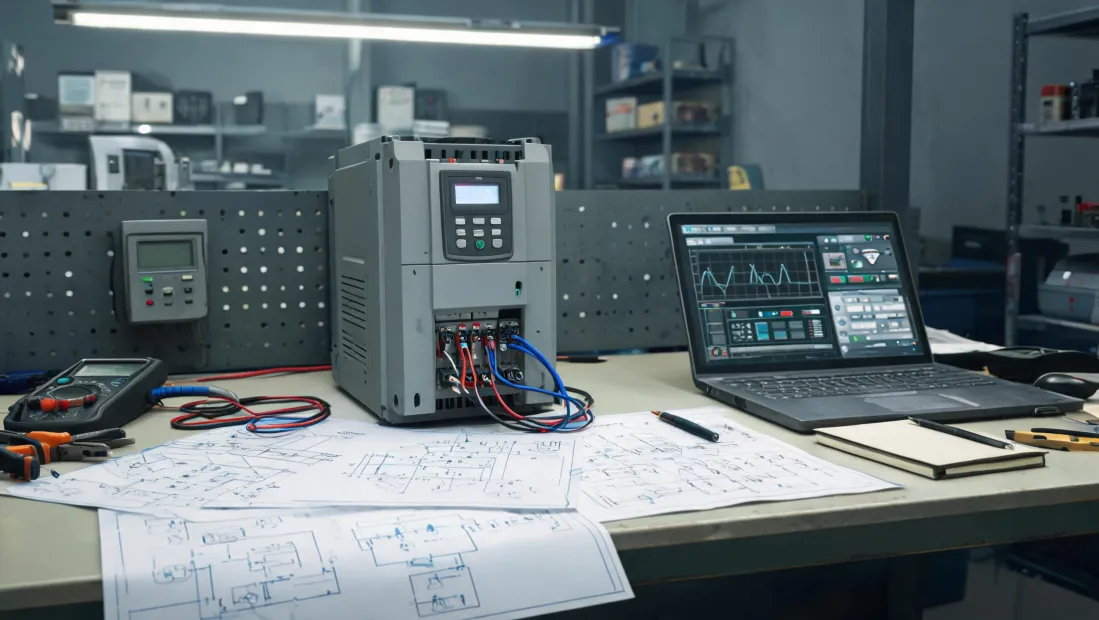
In January 2021, the plant manager walked over to my desk at 8:15 in the morning. That's never good. One of the wrapper lines was down, and the drive in the control panel had stopped working. He took me to the panel and pointed at a nameplate. "It's a Yaskawa VFD," he said. "V1000 series. 460 volt, 5 horsepower." Then he said the part that made it my problem: "Find us one."
The search should have taken ten minutes. I typed "Yaskawa VFD" into a search engine and found new drives, repaired drives, remanufactured drives, and "compatible with Yaskawa" drives. I thought the model name and horsepower were enough. That was my rookie mistake: ordering a part number I hadn't actually verified.
A drive is not a light bulb. You can't just match the socket. A Yaskawa VFD drive has a full set of controller specifications that go beyond voltage and horsepower—enclosure type, I/O configuration, communication options, braking capability, internal option cards, even the catalog suffix that defines the exact version. I didn't know that then. The supplier delivered what the listing said. The listing just didn't match what our control panel needed.
It cost about $600 in restocking fees and freight before I admitted the mistake. That was the cheap end. The line sat down for another day, and the maintenance crew looked at me the way they look at any office person who orders a part by reading a product title.
Controller Specifications Became My Checklist
After that, I stopped assuming "Yaskawa VFD" was a specification. I started writing down the things I knew I needed and asking my technical people to fill in the rest. Our plant engineer didn't have time to hold my hand, so I built a simple checklist:
- Exact manufacturer series and catalog number, not just "5 HP."
- Input voltage, phase, and control power requirements.
- Enclosure rating and ambient temperature range.
- I/O count, digital inputs, analog inputs, and communication protocol.
- Any option boards, braking resistor requirements, or coating needed for the environment.
- The manual or data sheet published by the original manufacturer.
That list looks obvious now. At the time, it felt like a foreign language. I used it for everything, not just Yaskawa VFD drives. It worked for motor controls, contactors, and eventually for a much bigger topic.
How to Evaluate Safety PLC Manufacturers When You're Not an Engineer
In 2024, our operations team asked me to manage the purchase side of a control panel safety upgrade. We had to compare proposals from two different control system integrators, and each one used a different safety PLC manufacturer. This time I knew enough to ask questions, but I still didn't feel like a specialist.
So when someone asks me how to evaluate safety PLC manufacturers, my honest answer is not about brand popularity. It's about documentation. A safety PLC is not something you buy based on a familiar name and a good price. You need to know exactly what the controller can do and what evidence the manufacturer provides to support the application.
I made a short checklist for the safety project too:
- Ask the safety PLC manufacturer or integrator to name the safety standard used in the design.
- Ask for full controller specifications: model number, I/O module numbers, power supply, communication interfaces, and any safety-rated expansion modules.
- Ask who performs commissioning and what documents will be provided after startup.
- Ask for the documentation package in a format your own maintenance team can keep and reference later.
- If the purchase goes through a PLC OEM or panel builder, ask them to list every major control component manufacturer on the quote.
One proposal looked strong at first. It listed a safety PLC from a well-recognized manufacturer, and the price fit the budget. I almost sent the purchase order through because the name felt familiar. That was my overconfidence moment—I knew I should double-check the details, but I thought, "How likely is it that they got the spec wrong?"
I called the manufacturer's application support and asked a simple question: did the bill of materials match the described safety configuration? The answer was no. One I/O module line was incorrect. If I had signed the PO without checking, we would have discovered the issue during installation, not during the quote review.
That experience changed my view of PLC OEM relationships too. If you buy through a PLC OEM, the same rule applies. The OEM should be willing to name the safety PLC manufacturer and explain the controller specifications. If they treat that question as an inconvenience, that's a red flag. The good ones don't hide behind vague descriptions.
A Small Order Taught Me the Biggest Lesson
I also want to mention the order that made me less cynical about suppliers. It wasn't a big VFD project. It was a small batch of relays for a shipping line, maybe a few hundred dollars. I called a distributor that listed genuine Yaskawa products and asked a basic question. The person on the phone didn't make me feel like a nuisance. They asked for the part number, sent me the spec sheet, and then pointed out a difference I hadn't noticed.
That small order mattered. Later, when we needed a replacement Yaskawa VFD drive, I called them first. Not because they had the lowest price, because I knew they would take the time to make sure the order was right. Small doesn't mean unimportant—it means potential. The companies that treat small buyers with respect often become the ones you trust with expensive parts later.
If you're buying through a distributor, a control system integrator, or a PLC OEM, watch how they respond to the first small order. A vendor that listens to a small customer's questions will probably listen when a bigger problem comes up.
What I'd Tell Another Buyer
It took me about five years and hundreds of purchase orders to understand that vendor capabilities matter less than vendor behavior. Any supplier can say they sell Yaskawa VFD drives or safety-rated controls. The supplier who actually checks the catalog number and asks about the application is the one who helps you avoid expensive surprises.
Today, when maintenance hands me a burned-out drive, I write a one-page request that includes the series, catalog number, control voltage, enclosure, and required options. I send it to a supplier who can verify it against real controller specifications. If they answer questions, they get the order. If they quote from a product title without asking about the application, I move on.
I still don't get excited about purchase order forms. But I've learned to get curious about the parts behind them. You don't need an engineering degree to buy control equipment well. You just need to ask enough questions to avoid the next $600 mistake.