
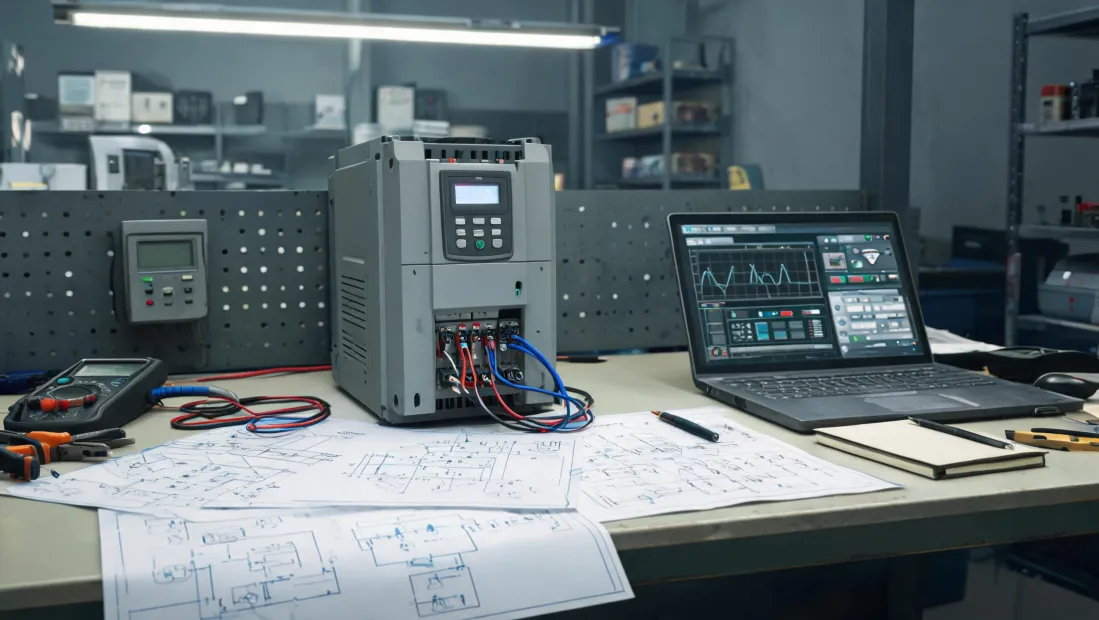
You've done the hard part. You narrowed your next drive purchase to Yaskawa VFD drives, and now you're comparing quotes from a few controller suppliers. One quote comes back 18% lower than the others. Same model numbers. Same promised delivery time. Feels like a win. That's exactly what worries me.
Let me explain why.
I'm a quality and compliance manager for an industrial controls distributor. I review incoming units before they reach customers—roughly 200 items a month, and I've been doing it for four years. In 2025, I've rejected just under 4% of first deliveries from new sources. Not because the boxes were empty. Because 'same model number' doesn't guarantee 'same product.'
The Surface Problem: Comparing Yaskawa VFD Quotes Like They're Commodity Parts
It's tempting to think a VFD is a commodity. Voltage, current, enclosure, done. The 'always get three quotes' advice is common, but it ignores what's not on the spec sheet: firmware version, manufacturing date, supply chain history, warranty registration, and the supplier's ability to answer a technical question after you pay.
Comparing drive specifications is the right starting point, but it's not the whole story. A Yaskawa V1000 with the correct voltage and current rating can still be the wrong drive if it's old stock that's been sitting in a warehouse for three years. And that's not a hypothetical. A drive model number identifies a family, not a specific unit. The model number says what the drive is, not what has happened to it since it left the factory.
What 'Matching Drive Specifications' Actually Means
Your checklist might include rated output current, overload capacity, input voltage, and enclosure type. Those are all necessary. They're just not sufficient. According to Yaskawa's installation manuals, the same drive model can behave differently depending on control mode, carrier frequency, ambient temperature, and option cards. If a supplier can't explain how these affect your application, they're just moving boxes.
For example, a fan and a conveyor can have the same motor horsepower but require different drive ratings. The normal-duty and heavy-duty ratings on a Yaskawa VFD are different current limits. If the supplier simply matches the motor horsepower without asking what kind of load it drives, you can end up with nuisance trips the first time the motor starts. That's not a drive problem; that's a specification problem.
Drive specifications aren't only electrical. They include software. Yaskawa releases firmware updates to change behavior and fix issues. If your supplier ships units that have been on a shelf for 18 months, you might be missing updates. The model number is the same; the software is not.
The Hidden Cause: Supply Chain and Firmware
The phrase that sets off every quality inspector: 'It's genuine—look at the box.' Genuine parts can be old, gray-market, or previously installed. There is a whole secondary market for industrial controls. I am not going to tell you all third-party sellers are bad. I will tell you that 'new' and 'authentic' are separate claims, and you need evidence for both.
Three things: paperwork can be forged. Serial numbers can be reused. Packaging can be replicated. That sounds dramatic until you receive a drive with scuffed mounting feet and a firmware mismatch.
People think expensive suppliers cost more because of brand markup. Actually, the supplier that verifies, tests, and stores current production has to charge more just to cover that work. The price isn't the cause; it's the result. A lower quote often means the verification cost has been removed and passed to you.
I said 'I need factory-new units with current production dates.' They heard 'I need boxes that look factory-new.' We didn't discover the difference until the drives were on a bench, and the firmware versions didn't match the manual.
In Q1 2024, we audited a batch of 30 'new' V1000 drives from a broker. Twelve had production date codes more than 26 months old. Four had firmware versions superseded by two generations. The broker said 'new in factory packaging.' That was true, but new didn't mean current. The customer spent two days updating parameters and re-testing the line.
In my first year, I made the classic spec error: assumed all new drives were identical. Cost me a $600 redo when a customer called because a drive wouldn't accept their existing program. The model number was the same. The firmware wasn't.
The Real Cost of Choosing by Price
Say the lower quote saves you $300 per drive. You order ten. The drives arrive, and one fails during commissioning. The service call runs $400, unplanned downtime is $1,200, and your engineer spends two hours troubleshooting. The $3,000 in upfront savings starts to look a lot thinner once you add the $1,600 problem. Now the 'bargain' is only $1,400, and you haven't counted the stress.
Even when a drive works, old stock can cost you. Electrolytic capacitors age during storage. A drive that has been sitting for years may have a shorter service life than a unit manufactured last quarter. It's still new in the box, but it's not new in the physical sense.
One of the more expensive lessons I've seen: a plant bought cut-rate Yaskawa VFD drives from a source that couldn't answer a single technical question. The drives worked, when they ran. But every call went to voicemail. The plant eventually paid a local integrator to reprogram and re-certify the whole line. Once they added labor, downtime, and delays, the bargain cost more than the original quote.
The most frustrating part is that customers blame Yaskawa. The drive is fine. The problem was built into the purchasing decision.
How to Evaluate PLC Manufacturers (and Any Controller Supplier)
So how do you avoid this? The same way I'd evaluate PLC manufacturers or any controller supplier. Look for processes, not promises.
First, ask for supply traceability. Can the supplier tell you where the unit came from? Are they an authorized distributor? Can they share the Yaskawa delivery paperwork? A legitimate controller supplier should be able to tell you exactly which authorized channel was used. If the answer is 'we use a few different sources,' that's a yellow flag.
Second, ask for production date and firmware version. Not just a model number. A genuine Yaskawa VFD has date and serial information on its nameplate. If the supplier doesn't know how to find it, they haven't checked.
Third, ask what happens if something goes wrong. Do they have a return process? A repair bench? An engineer on staff? This is where a cheap quote falls apart. The person who answers the phone before the sale should still be there after the sale.
Fourth, test a sample before committing to volume. Buy one unit. Open it. Check the firmware. Look for signs of use on the heatsink or mounting feet. This isn't paranoia; it's how I'd evaluate PLC manufacturers too. One sample tells you more than any datasheet.
Finally, buy the supplier, not just the product. The total cost of ownership includes your time, their support, and the probability of a headache. A slightly higher quote from a supplier who has a documented verification process is often cheaper. Why? Because the cost of a bad controller supplier isn't the invoice. It's the hour you spend troubleshooting somebody else's shortcut.
What I mean by total cost is not just 'service costs money.' I mean that the cheapest quote carries hidden obligations: you become the inspector, the logistics coordinator, and the technical support all at once. If you have time for that, maybe it's worth it. Most engineers don't.
Since I implemented our verification protocol in 2022, the number of problem units that reached customers dropped by nearly 40%. The change wasn't a more expensive supplier. It was a better verification process. That's what I recommend you buy.
The answer isn't to pick the most expensive supplier. It's to find the supplier who can show you what they're doing to protect your specifications—before you order, not after a fault code appears. That, in my experience, is how you evaluate any controller supplier, from Yaskawa VFD drives to PLCs. The price is what you pay; the supplier is what you get.